Headmasters Helpdesk

Education as a journey

Featured Image

The key to “Education as a Journey” is that you need to ask yourself the question: Am I open to receive learning and am I ultimately teachable?

Everything we know we learned from someone else including the matter we claim credit for. It may be new to us but it is not new. Thomas Edison, the famous inventor, claimed that he was a lifelong learner and stayed open and hungry for knowledge and being teachable: 

“I am not discouraged, because every wrong attempt discarded is another step forward.”

He was known for his lifelong commitment to learning, and remained open to new ideas whilst always eager to expand his knowledge, embodying the spirit of being teachable.

To succeed in life you must allow yourself to be teachable. To know whether you are teachable, ask yourself the following questions:

  1. Am I open to other people’s thoughts and ideas?
  2. Do I listen more than I talk?
  3. Am I willing to change my opinion based on new information?
  4. Do I readily admit when I am wrong?
  5. Do I think and observe before acting on a situation?
  6. Do I ask questions?
  7. Am I willing to ask a question that will expose my ignorance?
  8. Am I open to doing in a way I haven’t done them before?
  9. Am I willing to ask directions?
  10. Do I act defensively when criticised, or do I listen openly for the truth?

The questions outlined provide a thoughtful framework for self-reflection on what it means to be teachable. Each question encourages a mindset of humility, openness, and lifelong learning, which is essential for personal growth and success. Let us briefly discuss the significance of each:

  1. Am I open to other people’s thoughts and ideas? This question highlights the importance of embracing diverse perspectives. Being receptive to new viewpoints fosters creativity and helps you learn from others’ experiences.
  2. Do I listen more than I talk? Active listening is a cornerstone of teachability. It enables you to absorb information, understand context, and appreciate wisdom shared by others, rather than simply asserting your own opinions.
  3. Am I willing to change my opinion based on new information? Flexibility in thinking is crucial. It means you are not rigid, but instead willing to adapt and grow when presented with evidence or insights you had not considered before.
  4. Do I readily admit when I am wrong? Admitting mistakes is a sign of maturity and integrity. It allows you to learn from errors and prevents ego from blocking your progress.
  5. Do I think and observe before acting on a situation? Thoughtful observation and reflection before taking action helps you avoid impulsive decisions and encourages learning from the environment and circumstances.
  6. Do I ask questions? Curiosity is at the heart of learning. Asking questions shows a desire to understand and a willingness to fill gaps in your knowledge.
  7. Am I willing to ask a question that will expose my ignorance? This is a powerful indicator of teachability. It takes courage to admit you do not know something, but doing so is the first step towards growth.
  8. Am I open to doing things in a way I haven’t done them before? Trying new approaches demonstrates adaptability. It prevents stagnation and allows you to discover more effective methods.
  9. Am I willing to ask directions? Seeking guidance is a practical expression of humility. It shows you value learning from those who have more experience or expertise.
  10. Do I act defensively when criticized, or do I listen openly for the truth? Receiving feedback without defensiveness is essential for improvement. Open-mindedness to constructive criticism helps you identify areas for growth and development.

Collectively, these questions serve as a checklist for cultivating a teachable attitude. They encourage self-awareness and the willingness to continuously learn, which aligns with the broader theme of “Education as a Journey” reflected in your surrounding context. Whether you are a student, professional, or lifelong learner, regularly revisiting these questions can help you stay open, adaptive, and ready for new opportunities.

Nelson Mandela , the famous former President of South Africa believed implicitly in education and two of his well-known quotes delve into this very important topic.
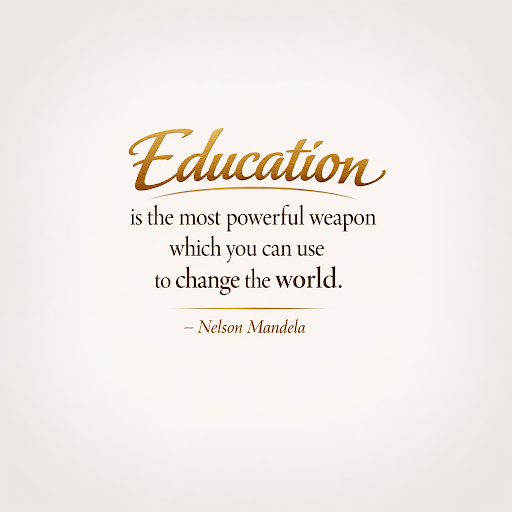
The topic of this blog  “Education as a Journey”, connects strongly to Nelson Mandela’s quote, “Education is the most powerful weapon which you can use to change the world.” A journey suggests long-term growth, effort, and progress, while a weapon symbolises power and influence. Mandela’s quote emphasises that education gives individuals the ability to bring about positive change, not only in their own lives but also in society. 

For teenagers, education is a journey during which they acquire knowledge, values, discipline, and critical thinking skills. As they move along this journey, education empowers them to overcome challenges, make responsible choices, and contribute meaningfully to their communities. 

The quote highlights the relevance of the heading by demonstrating, that each stage of the educational journey, strengthens teenagers and equips them with the tools needed to improve both their own futures and the world around them.
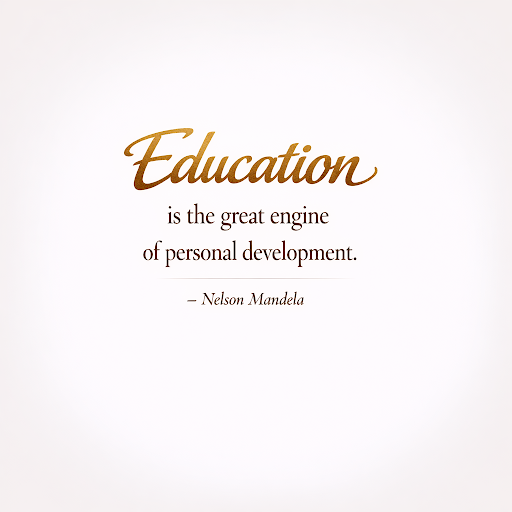
Nelson Mandela’s statement that “Education is the great engine of personal development” links closely to the theme  ‘Education as a Journey”. An engine drives movement and progress, just as a journey involves travelling from one point to another. In this sense, education is not a single event but a continuous process that moves a person forward throughout life. 

As school-going teenagers progress through different stages of learning, education helps shape their character, values, skills, and confidence. Each lesson, challenge, and success becomes part of the journey that contributes to personal growth. Mandela suggests that it is through this ongoing educational journey that individuals develop their potential, overcome limitations, and prepare themselves for adulthood and meaningful participation in society.

In conclusion, embracing “Education as a Journey “empowers individuals to grow, adapt, and contribute meaningfully to society. By remaining teachable, open to new experiences, and guided by the wisdom of leaders like Nelson Mandela, we can harness the transformative power of learning to shape our lives and the world around us. Ultimately, education is not merely a destination, but a lifelong path that leads to personal fulfilment and positive change.

Tags :